Cancer · Tumors
The official description mentions uses in aging and in cancer risk prediction and early detection.
Distinct from the separate cancer gene test
Image from official materials explaining the principle
PETAGE360 / TELOMERE TEST
A test that analyzes the length of telomeres, which protect the ends of chromosomes. Maru reads the analysis information together with your pet’s current condition and advises on the direction of health care.
See the testing process ↓WHAT DOES THIS TEST MEASURE?
Telomere length is analyzed from the DNA of cells collected with an oral swab.
Based on this measurement, aging-related comparison and interpretation items are summarized in the report.
| Result item | What does it show? | Type of information |
|---|---|---|
| Telomere length | Telomere length information for the analyzed sample. Animal reports in our records show it as a value in kb. | Analytical measurement |
| Length comparison by age group | Shows the comparison standard and length distribution for the relevant age group. | Comparison of a measurement with a standard |
| Telomere aging rate index | Describes aging-related rate information according to criteria set by the lab. | Indicator calculated and interpreted by the lab |
| Telo-age · Biological age | Interprets the analysis results in the form of an age and compares it with the actual age. | Indicator estimated by the lab |
| Tracking changes in telomere length | When there are retest records, changes in length over time are reviewed. | Comparison of repeated tests |
Items confirmed from the official test description and animal reports in our records. The actual items, units and comparison standards provided are confirmed according to the product ordered and the latest report. Indicators calculated by the lab are not presented as if each were measured from a separate sample.
Measuring telomere length is different from analyzing tumor-related genes or oral bacteria. The other test items can be checked separately below.
DISEASE RISK & HEALTH MANAGEMENT
The testing lab states that it uses telomere length and aging information for the risk management and tracking of the disease groups below. The list below is not a list of diseases that can be diagnosed with the telomere test.
The official description mentions uses in aging and in cancer risk prediction and early detection.
Distinct from the separate cancer gene testPresents heart- and blood-vessel-related risk as an area of health care.
Not a diagnosis of heart disease or a prediction of when it will developMentions metabolism-related indicators and risks as items for tracking.
Predictive performance for specific metabolic diseases not confirmedThe official cat care chart mentions the risk of chronic kidney failure.
Distinct from tests that directly measure kidney functionThe official cat care chart presents the risk of liver disease.
Not the same as liver function tests or diagnostic imagingThe official dog care chart mentions the prediction of joint and musculoskeletal diseases.
Does not determine the probability of any disease occurringWhat the test directly analyzes: Telomere length. Disease risk prediction is the testing lab’s description of how the results can be used; in the materials we have reviewed, we could not confirm this product’s detection rate, predictive accuracy or performance in calculating the probability of developing each disease.
Maru explains aging-related analysis information together with symptoms and history. The clinical care and additional tests needed to confirm a disease are carried out separately, as the veterinarian judges necessary.
Source: DNAGENICS official PetAge360 description, sections ‘Why it is needed’ and ‘Main items for regular checkups’ (checked 2026-10-15). We distinguish between research associations of telomeres with disease, this product’s clinical predictive performance, and actual diagnosis.
Separate cancer gene and hereditary disease test guides →WHY PETAGE360
Looks at information on cellular aging, separately from apparent age.
Reviews lifestyle information such as diet and activity together with the results.
At retesting, compares the results with previous records and analysis conditions.
WHO IS IT FOR?
Summarized from the target guidance in the official test description. Whether to test is discussed for each animal.
HOW THE TEST WORKS
 01
01Epithelial cells collected with a swab
 02
02Preparing DNA for analysis
 03
03Measuring telomere length
 04
04Results explained by the lab’s criteria
 05
05Linking clinical information and the direction of care
UNDERSTANDING YOUR REPORT
Comparison categories presented by the analysis lab. The colors are for reading the categories and are not an actual animal’s results.
30% or more shorter than average
10–30% shorter than average
Within the average range for the age group
10–20% longer than average
20% or more longer than average
Official category guide · the bars show long and short conceptually and are not measurements. The actual classification of borderline values follows the lab’s report.
The biological age and life expectancy predictions presented by the company are interpretive information. They do not determine an individual animal’s remaining lifespan or treatment effects.
FOLLOW THE CHANGE
We keep measurement conditions consistent and record daily life and clinical information alongside. When to retest is discussed based on the animal’s condition and the analysis lab’s guidelines.
EVERYDAY HEALTH CARE
Linked with other tests and clinical information
Recording changes in eating and movement
Looking at the everyday environment and exposure factors
Observing usual behavior and daily rhythms
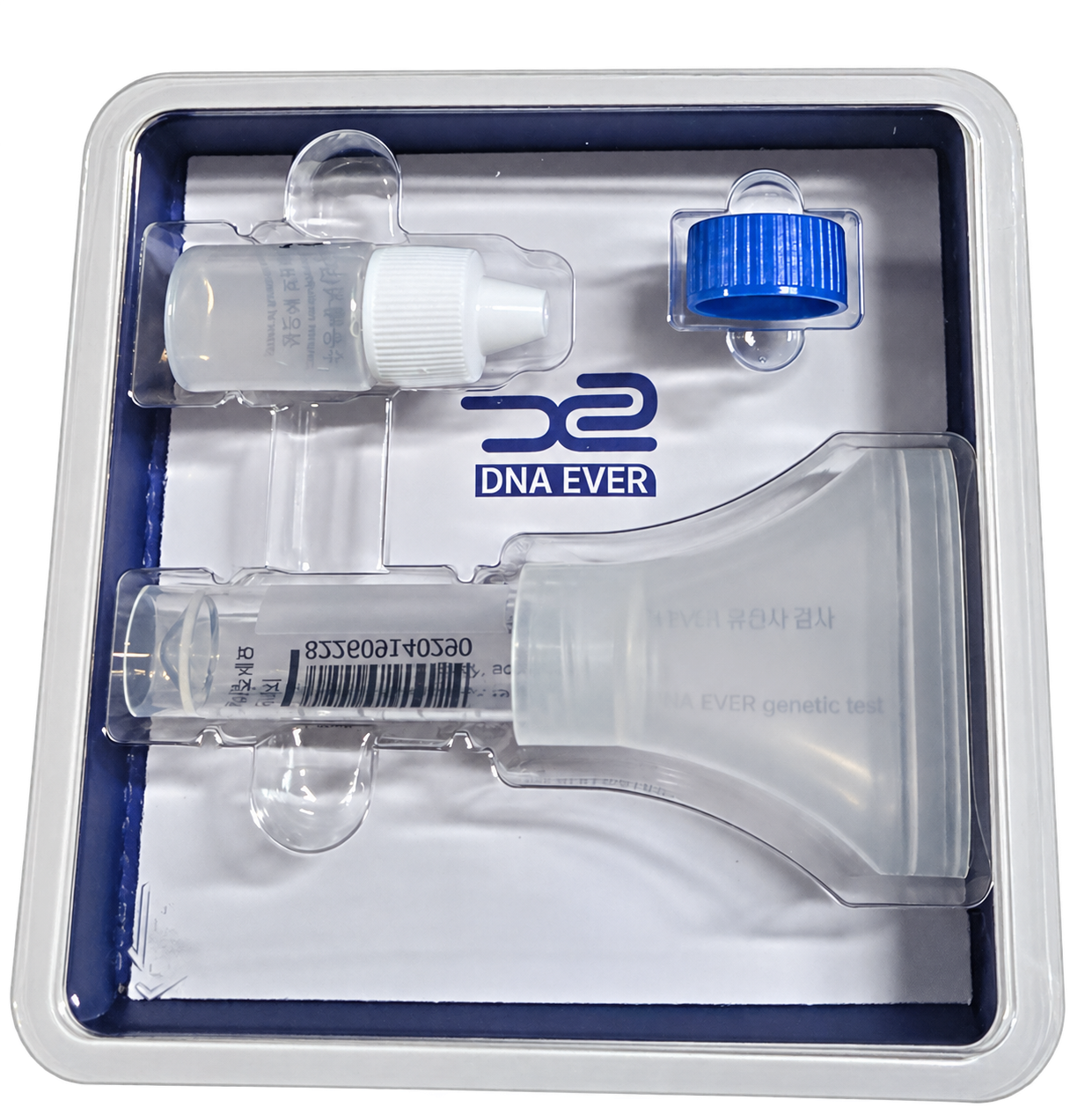
We confirm the right kit, collection conditions and result explanation for the test to be used.
Book a Consultation →Photo of a kit in our records · does not represent the standard contents of every product.
READ MORE WHEN YOU NEED
TELOMERE
Understand the telomere length measurement and comparison standards, and look at them together with lifestyle changes and clinical records.
See the testing process ↓01 / PETAGE360
PetAge360 is a test that measures the length of telomeres at the ends of chromosomes. The analysis lab presents it as a service that explains this measurement by comparing it with aging-related information.
According to the official description, the sample is obtained with an oral swab.
DNA for analysis is prepared from the collected sample.
Telomere length is analyzed using real-time PCR.
The measurement information is read together with the company’s comparison and interpretation criteria.
Check the units of measurement, comparison standards and analysis method. For retests, the collection and analysis conditions and the animal’s condition at the time are also considered.
Lifestyle changes and clinical records are put together and raised as questions in the consultation with the veterinarian. Changes in values and changes in actual symptoms are recorded separately.
The company presents interpretations such as biological age and life expectancy prediction. This is the company’s description of its service; it is not used here to determine an individual animal’s remaining lifespan or treatment effects. The test itself is not a treatment that lengthens telomeres.
Source: test principles and service introduction for the DNAGENICS “Banryeoae PetAge360 Test.”
View the scientific principles of telomeres and related research →THE SAMPLE KIT
The sample and kit used may differ from test to test. Check the parts to collect, the identification information, and the storage and shipping conditions against the instructions for the kit you will actually use.
Do not guess the reagent ingredients or order of use from the containers in the photo. Preparation related to food, medication and oral care is also given according to each test’s instructions.
WITH MARU
Review the animal’s basic information, symptoms, family history, clinical records and the purpose of testing together.
Check the product and items, costs, expected turnaround and re-collection conditions in the pre-test guidance.
Follow the actual kit’s instructions and make sure the animal’s identification matches the request form.
The explanation is prepared based on a report that confirms sample quality and analysis conditions.
In the consultation with the veterinarian, discuss what the results mean and any questions about further care or observation.
READING YOUR REPORT
For follow-up tests, also check whether results can be compared under the same conditions as before. Recording changes in values, changes in daily life and clinical progress separately makes the explanation more specific.
QUESTIONS & ANSWERS
We first discuss the animal’s condition, what you want to know, and what information this test can provide.
Sample types and kit instructions may differ. Collection, storage and shipping conditions are confirmed according to the guidance for the test concerned.
Risk is distinct from a confirmed diagnosis. Actual symptoms and examination and test findings must be interpreted together.
This guide does not determine an individual animal’s remaining lifespan as an exact period. The company’s interpretation, the measured values and clinical information are read separately.
Check before testing, based on the actual test and conditions. This guide does not promise any specific price or time frame.
INFORMATION SOURCES
We restructured DNAGENICS’ official service description to fit the reading flow of the Maru website. The company’s analysis and interpretation explanations are kept distinct from Maru’s clinical consultation guidance.
Source: DNAGENICS official website (dnagenics.co.kr) · checked October 15, 2026. This is not a confirmed list of all products, prices or operating conditions currently accepted by the hospital.