Hepatocellular carcinoma
ALDH2 · COX2 and 3 more
Related to carcinogen detoxification, inflammation suppression and the cell cycle
Image explaining the principle, from official materials
TWO TESTS, TWO QUESTIONS
Both obtain DNA with an oral swab, but tumor-related risk information and inborn genetic predisposition answer different questions.
From hepatocellular carcinoma to splenic cancer: see the 15 tumor items and representative genes listed on the official page.
See the 15 test items ↓02 / Hereditary diseases6 areasSee the heart, joint, skin, metabolic, kidney and liver areas and the representative genes listed on the official page.
See the genes in 6 areas ↓Cancer gene tests: tumor risk information based on the company’s criteria; hereditary disease tests: information on genetic predisposition to disease. Neither result replaces confirming or ruling out a current disease.
01 / TUMOR-RELATED GENES
Example test items and representative genes for 15 tumor types, as listed on the official cancer gene test page.
ALDH2 · COX2 and 3 more
Related to carcinogen detoxification, inflammation suppression and the cell cycleNRAS · KIT and 3 more
Related to cell growth signaling and tumor suppressionPIK3CA · CDKN2A and 3 more
Related to growth factor receptors and cell signalingRB1 · BCL2 and 3 more
Related to tumor suppression, cell proliferation and bone formationAPC · MLH1 and 3 more
Related to Wnt signaling and cell growthPIK3CA · ESR1 and 3 more
Related to DNA damage repair and estrogen responsePTEN · IDH1 and 3 more
Related to growth factor receptors and signaling inhibitionKRAS · CDKN2A and 3 more
Related to the TGF-β pathway and DNA repairNPM1 · TET2 and 3 more
Related to DNA methylation and immune signalingBCL2 · CDKN2A and 3 more
Related to apoptosis inhibition and immune responseKIT · NRAS and 3 more
Related to stem cell growth and hematopoietic regulationEGFR · KRAS and 3 more
Related to epithelial cell growth signaling and tumor suppressionKIT · NRAS and 3 more
Related to melanocyte proliferation and survival signalingRE · BRAF and 3 more
Related to thyroid cell growth and differentiation pathwaysKDR · PIK3CA and 3 more
Related to angiogenesis, cell growth and tumor suppressionReproduced from the ‘Example test items’ on the official page. ‘RE’ for thyroid cancer is written exactly as shown on the official page; the exact gene name and the panel actually accepted are confirmed before testing.
COMPANY RISK SCALE
These are the score ranges from the official page. The scores below are the testing lab’s risk classification, not stages of a confirmed tumor diagnosis.
A high risk level does not mean a tumor is present, and a low risk level does not rule out all tumors. Current signs such as lumps, weight loss or changes in appetite are assessed through examination and any necessary additional tests, such as imaging or blood work.
02 / INHERITED CONDITIONS
Areas and representative genes presented on the official hereditary disease test page.
MYBPC3 · TNNT2 etc.
Risk information related to hypertrophic cardiomyopathy and arrhythmiaCOL1A1 · FBN1 etc.
Risk information related to hip dysplasia and articular cartilageSPINK5 · FLG etc.
Related to allergic dermatitis, atopy and the skin barrierG6PC · CPT2 etc.
Risk information related to hypoglycemia and energy metabolism disordersPKD1 · COL4A3 etc.
Risk information related to polycystic kidney disease and chronic kidney failureATP7B · SERPINA1 etc.
Risk information related to copper metabolism disorders and liver fibrosisHOW IT IS ANALYZED
Finding a related variant does not mean the disease will necessarily develop. Conversely, the absence of that variant does not eliminate the possibility of all diseases. The applicable species and breeds and the meaning of each variant are confirmed in the actual test documentation.
READING THE RESULT
Start by checking the animal identification, collection date, test name and analysis items on the result report. The testing lab’s interpretation is read together with current clinical information.
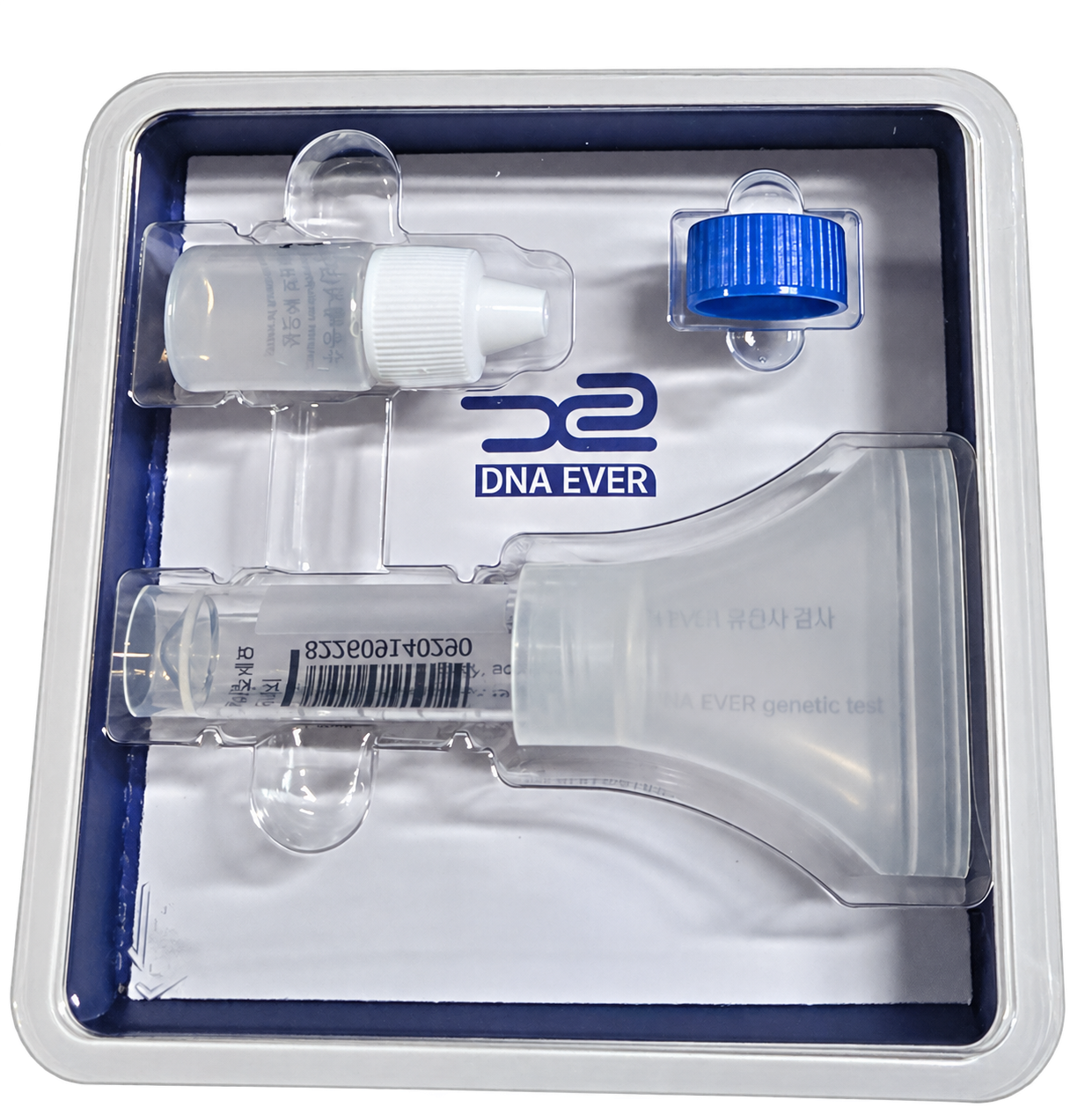
Actual kit we have · background removed
SAMPLE & KIT
Check the collection parts, identification details
and storage and shipping conditions for the test you will use.

Concept photo of sample handling
Not an actual Maru clinical scene or a collection from a specific animal.
The parts in our photo are not confirmed as common to all test products.
WITH MARU
 01Purpose consultation
What you want to know
and current condition
 02Sample preparation
Kit instructions
and animal identification
 03Lab analysis
Analysis method for each test
and quality check
 04Understanding results
Measured information
and the lab’s interpretation
05Consultation at MaruSymptoms and history,
and follow-up care questions
READ MORE WHEN YOU NEED
DIFFERENT TESTS, DIFFERENT QUESTIONS
Telomere length, oral microbes, disease-related genes. Because these tests look at different information, the starting point is to understand their purposes and results separately.
Analyzes telomere length from an oral sample.
View official test information →Looks at oral microbiome composition and the information needed for care.
View official test information →Distinguishes tumor-related genes from hereditary diseases.
Compare the two tests ↓Test information as presented by the analysis labs. The actual product, eligible animals and intake conditions are confirmed in a pre-test consultation.
03 / GENETIC ANALYSIS
Both tests deal with genetic information, but they analyze it to answer different questions. Risk ratings should be read together with clinical care that checks whether a disease is currently present.
The official page describes it as a service that analyzes tumor-related genetic information and provides a risk report.
Check the test items, target animals and the meaning of each risk level. A high risk level does not mean a confirmed tumor diagnosis, and a low risk level does not rule out all tumors. Symptoms, examination findings and additional test information are reviewed together.
Basis: DNAGENICS’ description of the test principle and results for the “Banryeoae Cancer Gene Test”. The number of items and product scope are confirmed under the actual order conditions.
A service that looks at disease-related gene variants. The official page gives heart, joint, skin, metabolic, kidney and liver areas as examples.
Check which items apply to the species and breed and what each variant means. Genetic risk information does not mean the disease is currently present. Family history and the actual condition are reviewed together to prepare questions for follow-up consultation.
Basis: DNAGENICS’ description of the test principle and areas for the “Banryeoae Hereditary Disease Test”. The AI and risk interpretation are the company’s descriptions; this does not mean we have independently verified diagnostic accuracy.
THE SAMPLE KIT
The sample and kit used may differ for each test. The collection parts, identification details, and storage and shipping conditions are checked against the instructions for the kit actually used.
We do not infer reagent components or the order of use from the containers in the photo. Preparation related to food, medication and oral care is also explained according to each test’s guidelines.
WITH MARU
We review the animal’s basic information, symptoms, family history, medical records and the purpose of the test together.
The product and items to be used, costs, expected turnaround and re-collection conditions are confirmed in the pre-test information.
We follow the actual kit’s instructions and make sure the animal’s identification matches the request form.
An explanation is prepared based on the result report, after checking sample quality and analysis conditions.
In the veterinary consultation, we discuss what the results mean and any questions about further care or observation.
READING YOUR REPORT
For follow-up tests, we also check whether results can be compared with previous ones under the same conditions. Recording changes in values, changes in daily life and clinical progress separately makes explanations more specific.
QUESTIONS & ANSWERS
Each test has a different purpose. We first discuss the animal’s condition, what you want to know and which items actually apply.
Sample types and kit instructions may differ. Collection, storage and shipping conditions are confirmed according to the instructions for that test.
A risk level is not a confirmed diagnosis. It must be interpreted together with actual symptoms and examination and test findings.
Genetic information and actual disease onset are not the same thing. The items covered, variants, species, breed, family history and current condition are reviewed together.
These are confirmed before testing, based on the actual test ordered and its conditions. This guide does not promise any specific price or timeframe.
INFORMATION SOURCES
DNAGENICS’ official service descriptions have been reorganized to fit the reading flow of the Maru website. The company’s explanations of analysis and interpretation are kept distinct from Maru’s clinical consultation guidance.
Source: DNAGENICS official website (dnagenics.co.kr) · checked October 15, 2026. This is not a confirmed list of all products, prices and operating conditions currently accepted by the hospital.